
Top 10 Best 4x6 Direct Thermal Labels for Shipping?
A carton moves through a busy shipping room in seconds: it is scanned, sorted, stacked, and sent on its way. A clear 4x6 Direct Thermal Labels print can help keep its destination and tracking details easy to read. The wrong roll can create trouble, though. Labels may curl at the edges, fade in warm conditions, or feed unevenly through a printer. Small defects matter.
“Choose labels for the journey, not just the printer,” says Laura Bennett, a shipping-label specialist. That is a useful rule of thumb, but it should be tested against the needs of your own operation. Printer compatibility, adhesive strength, face-stock quality, and roll dimensions all affect performance. So do storage conditions. A label kept beside a sunny window may not behave like one stored in a cool, dry supply room.
This guide compares ten popular 4x6 Direct Thermal Labels for shipping, focusing on practical details rather than bold claims. We look at print clarity, reliable feeding, adhesive performance, and value across different shipping volumes. Some labels suit daily warehouse use; others may be better for a small shop printing a handful of orders. No single roll is ideal for every setup. Check your printer specifications, test a sample on your packaging, and scan a few printed labels before ordering in bulk. A quick test can save a lot of reprints.
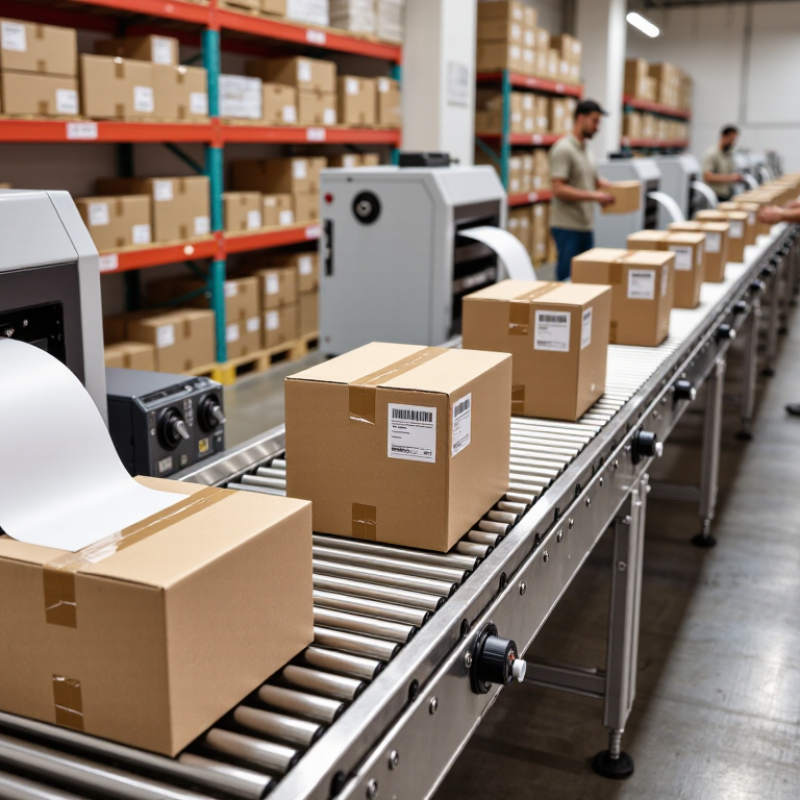
Understanding 4×6 Direct Thermal Labels and How They Work
A 4×6 direct thermal label is made for a simple job: show shipping information clearly without ink or a ribbon. Its coated surface darkens when heated by the printer’s thermal head. The head applies heat in tiny patterns, creating text and barcodes on the label. That means fewer supplies to replace. The trade-off is that the print can fade faster than ribbon-based printing, especially with heat, sunlight, or long storage. A crisp label today may not stay crisp forever.
Printer compatibility matters. Check that the printer accepts 4×6-inch media and the label roll or fanfold format you plan to use. Load the labels with the printable side facing the thermal head; the exact path depends on the printer. If text looks pale, check the print settings and clean the print head according to its manual. A short test run can reveal feed or alignment problems before a busy shipping session. I would not assume every label coating behaves identically.
Tips: Print one label, then scan its barcode before mailing a package. Store unused labels in a cool, dry place, away from direct sunlight. Small steps, but useful ones.
Top 10 Best 4x6 Direct Thermal Labels for Shipping? - Understanding 4×6 Direct Thermal Labels and How They Work
Direct thermal labels use heat-sensitive face stock, so they print without an ink ribbon. The options below describe common label constructions and formats rather than ranked or branded products. Actual printer fit depends on the printer’s supported label width, roll or fanfold feed, core size, and media sensor.
| Label option | Typical face stock | Adhesive | Feed format | Suitable use | Key considerations |
|---|---|---|---|---|---|
| 1. Standard uncoated paper | Direct thermal paper, usually without a protective topcoat | General-purpose permanent | Roll or fanfold | Routine parcel shipping and short-term identification | Economical for ordinary handling; print can fade faster with heat, sunlight, friction, or moisture. |
| 2. Top-coated paper | Direct thermal paper with a protective surface coating | General-purpose permanent | Roll or fanfold | Shipping labels exposed to more rubbing or handling | The coating can improve resistance to scuffing and some environmental exposure; it does not make paper fully waterproof. |
| 3. Permanent-adhesive paper | Uncoated or top-coated thermal paper | Permanent, general-purpose formulation | Roll or fanfold | Corrugated cartons and common shipping packaging | Adhesion varies by carton surface, dust, temperature, and application pressure; verify performance on the actual package. |
| 4. Removable-adhesive paper | Direct thermal paper | Removable, lower-tack formulation | Roll or fanfold | Temporary carton identification or applications where clean removal is needed | Not the default choice for parcel labels that must remain attached throughout transit; removability depends on surface and dwell time. |
| 5. High-tack paper | Direct thermal paper, often top-coated | Higher-tack permanent formulation | Roll or fanfold | Rough, textured, or recycled packaging when standard adhesive is insufficient | Test on the intended substrate; a stronger adhesive may be harder to remove and is not suitable for every surface. |
| 6. Cold-temperature paper | Direct thermal paper selected for low-temperature applications | Cold-service adhesive formulation | Roll or fanfold | Packages or goods labeled in chilled environments | Confirm the label’s stated application and service temperature; cold performance depends on both adhesive and surface conditions. |
| 7. Moisture-resistant thermal paper | Thermal paper with a protective coating | Permanent, matched to the intended application | Roll or fanfold | Shipping where occasional splashes or damp handling are possible | Resistance varies by construction; check the product specification rather than assuming the label is waterproof. |
| 8. Synthetic direct thermal film | Heat-sensitive synthetic film, commonly polypropylene-based | Permanent formulation for the intended surface | Roll or fanfold, subject to printer support | Applications needing more tear or moisture resistance than paper | Verify print darkness, media compatibility, and environmental limits; synthetic media is not compatible with every printer. |
| 9. Perforated fanfold paper | Direct thermal paper, coated or uncoated | Usually general-purpose permanent | Stacked fanfold sheets with perforations | Higher-volume printing where roll changes or roll holders are inconvenient | Requires a printer that supports fanfold feeding and enough space behind or below the printer for the stack. |
| 10. Core-size-matched roll paper | Direct thermal paper, with a core and roll diameter chosen for the printer | Usually general-purpose permanent | Roll; core sizes commonly include 1-inch and 3-inch formats | Printers with a specified roll holder or internal media bay | Check the printer manual for maximum roll diameter, core size, label width, and loading orientation before ordering. |
How the printing works: A direct thermal printhead heats selected areas of the label’s heat-sensitive coating to create text and barcodes. No ribbon is used. For a 4 × 6-inch label, confirm that the printer supports the label width and feed format, then choose adhesive and face stock for the package surface and expected handling conditions.