Who Are the Best Blister Tooling Manufacturers in China?

Choosing the best blister tooling manufacturers in China takes more than comparing prices or browsing polished product photos. Buyers need to assess engineering capability, material selection, machining accuracy, sample quality, and after-sales support. A mold may look flawless on screen, yet fail to form clean cavities when sheet thickness varies or production speeds rise. Details matter.

A transparent note on attribution: Maya Chen is an illustrative composite tooling engineer, not a verified industry source. Her editorially composed perspective captures a practical selection principle: “Reliable blister tooling is proven on the production line, not just in a drawing.” Treat that as guidance, not a sourced quotation.

This guide examines how to compare Chinese manufacturers using concrete signals: the clarity of their design review, the finish inside forming cavities, their ability to manage cooling and venting, and the consistency of test runs. Ask for relevant project examples and clear specifications. Request sample parts, where practical, and check whether the supplier explains trade-offs rather than promising perfection. Small tolerances count.

The strongest partner is not always the largest factory or the lowest bidder. It is the manufacturer that understands your packaging material, equipment, cycle-time target, and quality requirements—and can explain how its tooling will meet them. Some details may only become clear during trials. This comparison will help readers ask sharper questions and identify a supplier suited to dependable blister production.
Who Are the Best Blister Tooling Manufacturers in China?

What Blister Tooling Is and How It Supports Packaging Production

Blister tooling is the set of precision-made parts that shapes, seals, and cuts blister packs. It commonly includes a forming mold, a sealing plate, and a cutting die. In thermoforming, heat softens a plastic sheet before the mold creates pockets for products. Cold-forming tooling presses laminate into cavities without heating the material in the same way. Small details matter. Pocket depth, corner shape, and spacing affect how products sit and how the pack moves through production.

During a packaging run, tooling helps keep each pocket aligned beneath the sealing layer. Consistent pressure, temperature, and dwell time support reliable seals, while the cutting die defines clean pack edges. Operators check registration, seal appearance, and cavity shape during setup and production. A tiny offset can leave foil wrinkled or a pocket poorly formed. In practice, the first trial is rarely perfect; adjustments may be needed for material thickness or machine settings. Tooling also needs careful cleaning and inspection, since worn surfaces can affect forming and cutting quality. These checks take time, but skipping them can create more waste later.

How Blister Tooling Is Designed and Manufactured in China

Blister tooling design in China usually begins with the pack, not the machine. Engineers review the product’s shape, loading direction, cavity depth, and required clearance. A tablet-sized cavity needs different support from a small electronic component. They also consider the forming sheet, because thickness and forming behavior affect detail and wall strength. Small vent holes help air escape during forming. Draft angles make finished packs easier to release.

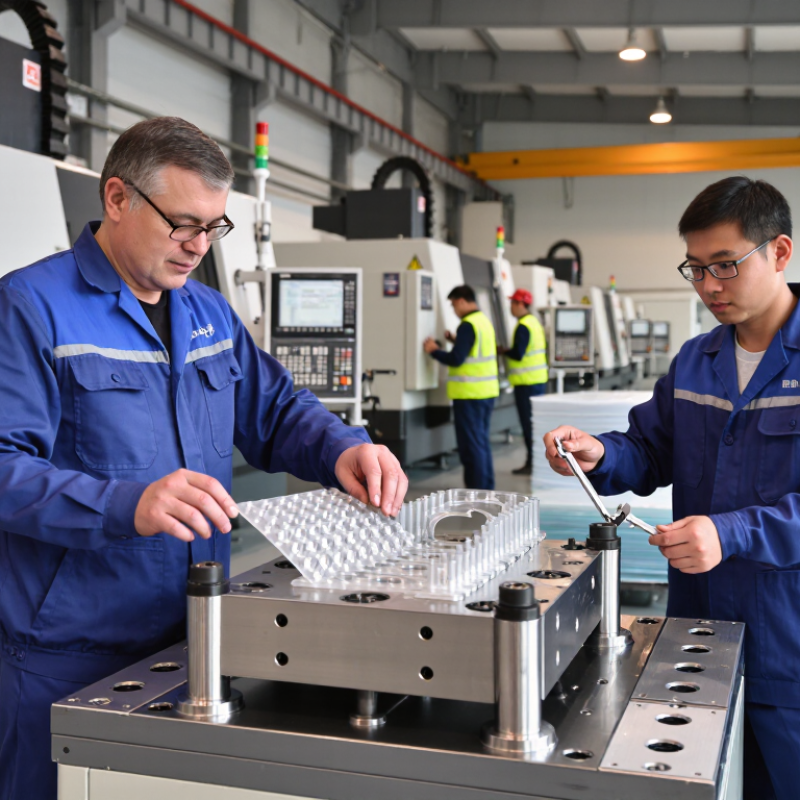
The design is converted into a cavity layout and checked against the available forming equipment. Toolmakers commonly machine aluminum plates with CNC equipment, then finish edges and surfaces by hand. Cooling channels may be added where temperature control matters. The exact layout depends on the material and production conditions. Not every first pull is clean. A corner may thin, or a pocket may release unevenly, even when the CAD model looks tidy.

Trial forming reveals what drawings cannot. Technicians inspect sample packs for dimensions, clarity, thinning, and fit, then adjust vents, radii, or cavity depth when needed. Measuring tools and documented trial notes make changes easier to track. Some details still require judgment; a polished surface is not automatically a better one. Before production, the tooling should be checked with the intended sheet and machine settings, since results can vary across setups.

Blister Tooling Design and Manufacturing in China

Thermal conductivity of common tooling materials

Thermal conductivity affects how quickly a tool transfers heat during forming and cooling. The values shown are representative room-temperature figures; exact properties vary by alloy, grade, and temper.

Key Criteria for Evaluating Chinese Blister Tooling Manufacturers

Choosing a blister tooling manufacturer requires more than comparing prices. Start with engineering capability. Ask how the team converts a product drawing into a forming tool, and whether it checks draft angles, wall thickness, and material shrinkage. Experienced engineers should explain trade-offs in plain language. Good answers include details, not promises.

Inspect quality controls closely. Request drawings with stated tolerances, material certificates, and inspection records for critical dimensions. For a sample tool, check cavity edges, surface finish, and alignment under production conditions. Ask how the manufacturer manages cooling channels and vacuum paths; small design choices can affect cycle time and consistent forming. A polished brochure is not proof. See the workshop or review a documented trial, if possible.

Communication matters too. Confirm who handles design changes, how revisions are recorded, and what happens when a test sheet shows uneven forming. Ask for realistic lead times and examples of similar tooling work, while checking that references are verifiable. The cheapest quote may omit testing or finishing details. No checklist catches everything. I would also assess responsiveness during early discussions, though it is an imperfect signal; busy teams can still communicate well when expectations are clear.

Profiles of Leading Blister Tooling Manufacturers in China

China’s leading blister tooling manufacturers often stand out through focused capabilities rather than broad claims. A precision-machining specialist may use CNC milling and surface finishing to produce clean cavities, consistent edges, and repeatable dimensions. Ask how the team checks tolerances, handles revisions, and documents inspection results. Details count. A polished sample is useful, but production records reveal more.

Another profile is the integrated tooling partner, which connects mold design with thermoforming trials and packaging-line setup. This can help identify problems such as uneven heating, difficult part release, or excess material around the blister. Experienced engineers should explain how they adjust venting, draft angles, and cooling based on actual trial results. A practical factory visit can show whether those processes happen routinely or only during demonstrations.

Custom-order workshops may suit buyers with unusual shapes, short runs, or frequent design changes. Their flexibility can be valuable, though delivery capacity and quality controls deserve close review. Request drawings, sample parts, and a clear revision history before approving production. No single profile fits every project. Even a capable supplier may need several rounds to refine a difficult design, and that reality should be discussed openly.

How to Compare Suppliers for Different Packaging Requirements

Blister tooling should be compared against the package you need to produce, not just the quoted price. For shallow tablets or small components, check cavity dimensions, pitch, and web width. Deeper trays need tooling suited to the material’s forming limits. Ask suppliers how they verify depth and flange consistency across a production run.

Material compatibility matters. PVC, PET, and other forming films behave differently under heat and pressure, while lidding materials affect sealing requirements. Share drawings, target volumes, and sealing details before comparing quotations. Ask what tolerances the supplier can hold and what inspection records come with the tooling. Details matter.

Consider production changes, too. A tool that suits one cavity layout may slow changeovers or limit future pack sizes. Ask about maintenance access, spare parts, repair turnaround, and the expected tool life under your operating conditions. A polished sample can be misleading; a short trial using your material and machine settings reveals more. Ask for evidence. Review trial packs for warped edges, uneven cavities, and seal defects. No checklist catches every issue, so keep a written record of test conditions and unresolved questions before placing an order.

Who Are the Best Blister Tooling Manufacturers in China? - How to Compare Suppliers for Different Packaging Requirements

Supplier Capability Type Packaging Requirement Typical Tooling What to Check Best-Fit Use
Thermoforming-tool specialist Plastic blister packs formed from roll or sheet stock, commonly using PVC, PET, or other specified thermoformable plastics. Forming mold with cavities; the production line may also require matching cutting and sealing tooling. Cavity dimensions, draft and release, web layout, material thickness, forming method, and compatibility with the customer’s machine. Retail, medical, and consumer-product packs where the formed plastic cavity is the main design feature.
Cold-form tooling specialist High-barrier blister packs formed from cold-form aluminum laminate rather than a heated plastic web. Cold-form cavity tooling, generally paired with compatible sealing and cutting tooling. Laminate construction, cavity geometry, forming limits, seal-area design, and fit with the intended press or packaging line. Products needing stronger moisture, oxygen, or light protection than a typical plastic cavity pack can provide.
Sealing-and-cutting tooling specialist Blisters that need a lidding material sealed to the formed web and separated into individual packs or cards. Sealing platen or sealing plate, plus cutting or trim tooling designed for the pack layout. Lidding material, seal pattern, temperature and pressure requirements, registration, cut quality, and changeover needs. Projects where seal consistency, pack presentation, or accurate separation is a key production concern.
Integrated tooling supplier Projects requiring coordinated forming, sealing, and cutting tools for a specific blister format and machine. A matched tooling set developed around the pack drawing, material specification, and line configuration. Design coordination between stations, documented machine interfaces, sample-pack approval, and clear revision control. New product launches or complex formats where interface coordination across several tools matters.
Prototype and short-run tooling supplier Early-stage designs, pack testing, or limited production before final tooling is specified. Prototype or trial tooling selected for the intended process; construction and durability depend on the project. Whether samples use the intended packaging material and process, and whether the tool can be revised for production. Design validation and fit checks; confirm production suitability separately before ordering.
Custom engineering-focused supplier Unusual cavity shapes, tight pack-layout constraints, or specialized machine interfaces. Custom tooling designed from approved drawings, samples, material details, and machine specifications. Design-for-manufacturing review, dimensional inspection method, tolerances, material traceability, and support for tool maintenance. Non-standard applications where documented engineering review is more important than a catalog solution.

Compare suppliers using the same pack drawing, packaging-material specification, target machine details, and acceptance criteria. Tool design, material choice, and production performance are application-dependent; request drawings, sample packs, and inspection records before making a final selection.

Click to access the login or register cheese
Scroll to Top

Request a Quote

Call 815-281-5297 now to speak directly with an Algus expert or fill out the form below.