
7 Tips for Choosing the Best Thermal Sticker Roll
A Thermal Sticker Roll may look like a simple cylinder of paper, but the wrong choice can mean faded barcodes, curled corners, or adhesive residue on a printer platen. The best roll depends on where the label will go, how long it must remain readable, and which printer will feed it. A narrow roll that fits the spindle is only the starting point. Coating, adhesive, core size, and storage conditions matter, too.
Quality expert W. Edwards Deming is often credited with the reminder, “Quality is everyone’s responsibility.” It is not a thermal-label industry quote, but the principle fits this purchase: a roll affects printing, packing, shipping, and customer experience. Check the printer specification before ordering. Then consider exposure to heat, sunlight, moisture, and friction. A shipping label stored in a warm van faces different conditions from a shelf tag inside a shop.
Small details count. Measure the core. Compare label width with the printhead. Test one roll before buying a case. Even a good label can disappoint when stored beside a sunny window. Some recommendations may need adjustment after a real-world test; label surfaces and printers vary. This guide covers seven practical checks for choosing a Thermal Sticker Roll, from material and adhesive to compatibility and value. No single roll suits every job. The useful choice is the one that prints clearly and stays attached where you need it.
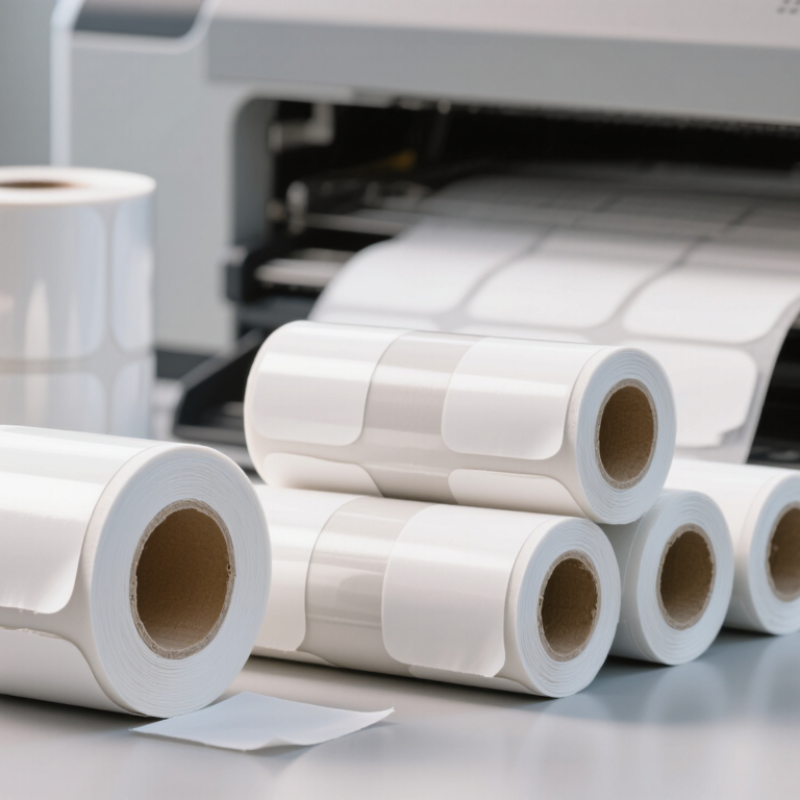
Understand Thermal Sticker Rolls and Your Labeling Needs
7 Tips for Choosing the Best Thermal Sticker Roll
Understand Thermal Sticker Rolls and Your Labeling Needs
Before selecting a thermal sticker roll, consider where the label will go and how long it must remain readable. A parcel label used for a short shipment has different needs from a freezer label or a product stored in sunlight. The distinction matters. Direct thermal labels use heat-sensitive material and need no ribbon, while thermal-transfer labels use a ribbon and often suit longer-lasting applications. Grand View Research valued the global labels market at USD 47.9 billion in 2023 and forecast a 4.1% compound annual growth rate from 2024 to 2030. This broad market figure is not specific to thermal rolls, but it reflects how widely labels support logistics and product identification.
Match the roll to the printer before ordering: check label width, roll diameter, core size, and whether labels are spaced with gaps or black marks. A roll that nearly fits is still a poor fit. Adhesive matters just as much. Paper, corrugated cardboard, glass, and cold plastic can respond differently, especially when surfaces are dusty or damp. Ask what temperature the label will face during application and storage.
Test a small batch on the actual surface. Scan it after handling, chilling, or brief exposure to light, depending on its intended use. I would not rely on a sample label that only looks good on a desk. The detail that gets missed is often the end use.
| Tip | What to Check | Practical Guidance | Why It Matters |
|---|---|---|---|
| 1. Match the printing method | Direct thermal or thermal transfer | Direct thermal labels develop an image through heat and do not use a ribbon. Thermal transfer labels use a ribbon to transfer ink onto the label face. | The printer, label coating, and printing method must be compatible. Direct thermal is often suitable for short-term labels; thermal transfer is commonly chosen when longer-lasting print is needed. |
| 2. Confirm label dimensions | Label width, length, and gap or mark spacing | Measure the required label size and check the printer’s supported media width and sensing method. Use labels with the gap, notch, or black mark format the printer can detect. | Incorrect dimensions or sensing features can cause feeding errors, misalignment, or wasted labels. |
| 3. Check roll and core compatibility | Core diameter, roll outside diameter, and unwind direction | Compare the roll’s core size and maximum outside diameter with the printer’s specifications. Check whether the printer requires a particular label orientation or unwind direction. | A roll that does not fit the printer or its holder may not feed reliably, even if the individual labels are the right size. |
| 4. Choose a suitable label face material | Paper or synthetic face stock | Coated paper is commonly used for indoor shipping and product labels. Synthetic materials such as polypropylene or polyester are often selected for applications needing greater resistance to moisture, tearing, or abrasion. | The face material affects print performance, durability, flexibility, and suitability for the surface or environment. |
| 5. Select the right adhesive | Surface type, temperature, and removability | Consider whether the label will be applied to cardboard, plastic, glass, or another surface. Choose permanent, removable, or specialty adhesive according to the application, and check the adhesive’s recommended application and service temperature ranges. | Adhesion can vary with surface texture, cleanliness, temperature, and exposure conditions. The right adhesive helps reduce peeling, residue, or label movement. |
| 6. Account for the label’s environment | Heat, sunlight, moisture, chemicals, and storage time | Direct thermal images can darken with heat or prolonged exposure to light and may be affected by contact with certain chemicals or oils. For demanding conditions or longer storage, evaluate a thermal-transfer construction and suitable face stock. | Environmental exposure can affect both print readability and label adhesion. Match the construction to the actual conditions the label will encounter. |
| 7. Test print quality and supply consistency | Barcode readability, coating, winding, and sample performance | Print a sample using the intended printer settings. Check barcode scanning, text clarity, label tracking, and adhesion on the actual surface. Confirm roll length and label count when estimating usage. | A practical test can reveal feed, print, or adhesion issues before a large order is put into regular use. |