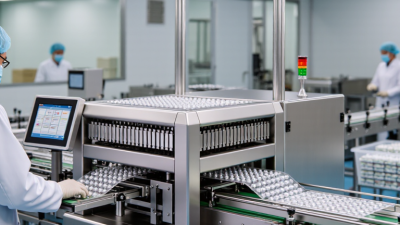
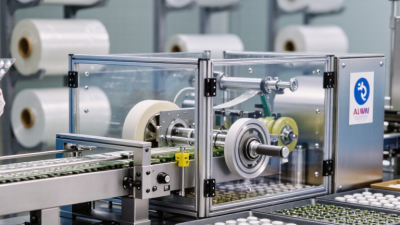
What Is a Blister Machine and How Does It Work?
A blister machine forms, fills, and seals individual product cavities between a shaped film and a backing material. In pharmaceutical packaging, those small pockets help protect tablets from handling and moisture. The process looks simple from outside. Inside, heat, pressure, timing, and alignment must work together.
The market reflects the importance of this equipment. Grand View Research’s Blister Packaging Market analysis valued the global market at approximately USD 27.1 billion in 2023 and projected a 6.2% compound annual growth rate from 2024 to 2030. That estimate covers blister packaging, not machine sales alone, but it signals sustained demand for reliable production. A blister machine typically unwinds a forming web, heats and shapes cavities, loads products, applies lidding material, and seals each pack. Cutting and inspection may follow, depending on the line.
The details matter. A poorly matched forming temperature can distort cavities; inconsistent product placement can leave empty pockets. Operators therefore check settings, seals, and finished packs during production. The exact setup depends on the material, product, output target, and machine design. No single setting fits every line. Even a well-designed machine needs careful adjustment, and that part is easy to underestimate. Understanding each stage makes it easier to choose equipment, spot process risks, and ask suppliers precise questions.
Blister Machines Defined: Form-Fill-Seal Systems for Unit-Dose Packaging
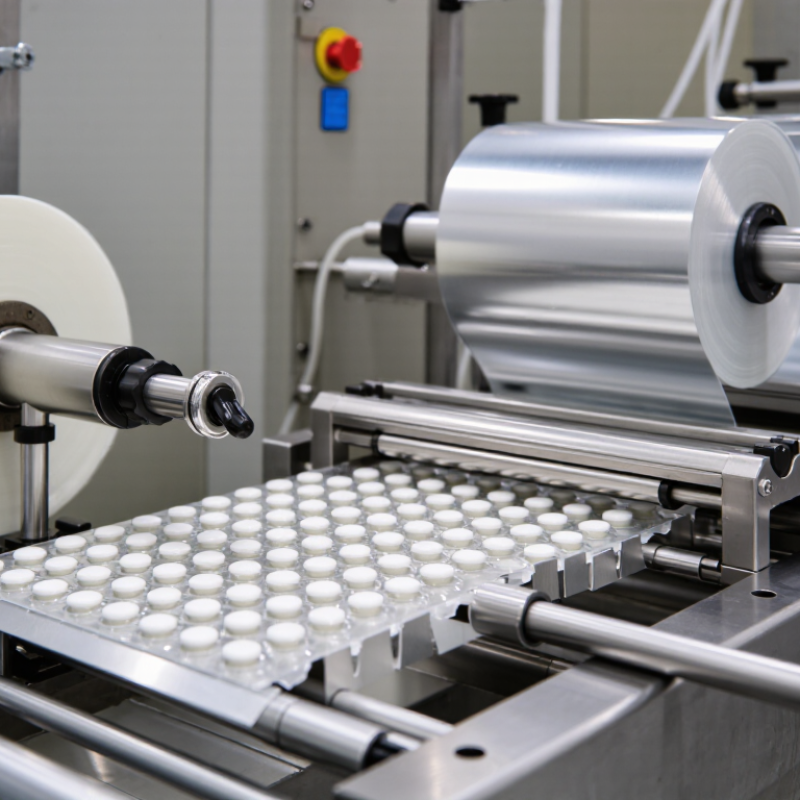
A blister machine is a form-fill-seal system that turns packaging material into separate product pockets, then closes each pocket with a lidding material. In thermoforming, heat softens a plastic web before forming stations press cavities into it. Cold-forming shapes a laminate mechanically instead. Each method suits different barrier and product requirements.
The line feeds formed pockets under a dosing station, where tablets or other solid units drop into cavities. Sensors can flag missing or misplaced units. A sealing station bonds foil or film across the pockets, and cutting tools separate the finished cards. Small details matter: uneven heat or a dusty seal area can weaken closure quality. Even a stable line needs checks.
PMMI’s 2023 State of the Industry report recorded US packaging-machinery shipments of $10.9 billion in 2022, up 5.8% from 2021. The figure covers packaging machinery broadly, not blister equipment alone, so it offers market context rather than a blister-line forecast. For unit-dose packaging, operators still need to verify cavity formation, fill accuracy, seal integrity, and printed lot information. No setting stays perfect forever. Temperature, material thickness, and line speed can shift during a run, making routine inspection essential.
What Is a Blister Machine and How Does It Work?
A blister machine forms cavities in a packaging web, places products into them, seals the web with a lidding material, and cuts the finished packs. The forming method depends on the material: plastic webs are commonly thermoformed, while cold-form aluminum is shaped mechanically.
Chart note: The bars show workflow order, not duration or machine output.
Core Components: Web Unwind, Forming Station, Product Feeder, Sealer, and Cutter
What Is a Blister Machine and How Does It Work?
Core Components: Web Unwind, Forming Station, Product Feeder, Sealer, and Cutter
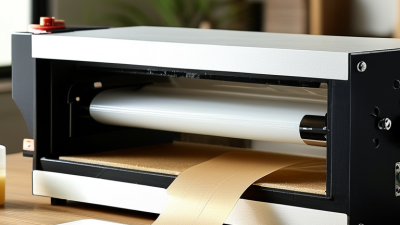
A blister machine turns a continuous packaging web into sealed, individual packs. The web unwind feeds plastic or foil from a roll, keeping tension steady. Too much tension can stretch the material; too little can cause wrinkles. At the forming station, heat and pressure shape cavities in the web. Operators check cavity depth and temperature, since small changes can affect fit and seal quality.
The product feeder places items into each cavity. A sensor may detect missing products, but it cannot correct every misfeed. The sealer bonds a lidding layer to the formed web. Seal pressure, dwell time, and temperature need to match the materials. Finally, the cutter separates packs and shapes their edges. PMMI’s 2023 State of the Industry report estimated U.S. packaging machinery shipments at about $10.9 billion in 2022, reflecting the scale of equipment used across packaging lines. Material choices matter too: the OECD’s Global Plastics Outlook reported that global plastics production reached 460 million tonnes in 2019. That figure is not specific to blister packaging, but it is a useful reminder to minimize trim waste and validate material settings. A fast line is not always a stable one. A short trial can reveal more than a polished speed target.
Cavity Formation: Thermoforming Plastic Webs or Cold-Forming Aluminum Foil
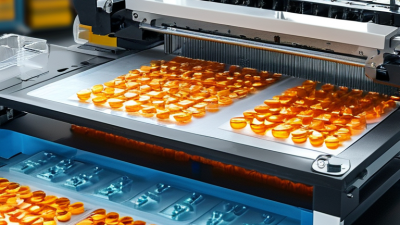
A blister machine forms a shallow pocket, or cavity, in a packaging web before products are loaded. With thermoforming, rollers carry plastic film through a controlled heating zone. The softened sheet then meets a forming mold. Vacuum, compressed air, or a mechanical plug presses the plastic into each pocket. The mold sets the cavity’s shape and depth. Cooling follows. Small changes in temperature or forming pressure can affect pocket dimensions, so operators monitor the web and inspect samples during production.
Cold-forming uses pressure instead of heat to shape a laminate that includes aluminum foil. A matched die presses the material into cavities, stretching it without heating the web. No heat is used. The foil layer provides a strong barrier against light and moisture, but it usually makes the pack opaque and less flexible in shape. Deeper cavities may require careful control to prevent thinning or uneven edges.
The right forming method depends on the product, required protection, cavity geometry, and line setup. Thermoformed plastic can offer clear viewing and adaptable shapes; cold-formed foil can provide a more robust barrier. Neither choice is automatically better. A useful check is to measure cavity depth across the web, not just at its center. Even then, settings that work on one material may need adjustment on another. That part is easy to underestimate.
Filling and Sealing: Dose Products, Apply Lidding Foil, and Form Hermetic Seals
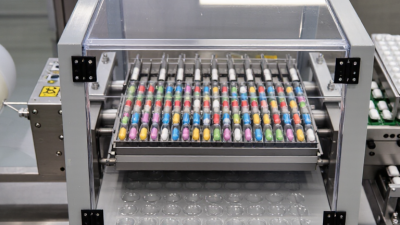
Once the cavities are formed, the blister web advances to the filling station. An aligned feeder places a measured dose into each pocket. Depending on the product, that dose may be a tablet, capsule, or another solid unit. Sensors can detect empty or misplaced pockets before sealing. Small details count. A tablet resting on a cavity edge may interfere with the seal, so consistent feeding matters as much as speed.
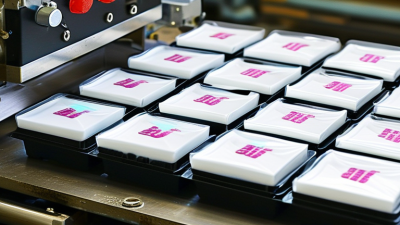
Next, lidding foil is guided over the filled web. Heated plates press the foil against the surrounding material, using controlled temperature, pressure, and dwell time to create a tight seal. These settings must suit the packaging materials; excess heat can distort a cavity, while too little pressure may leave a weak bond. The goal is a hermetic barrier that helps limit exposure to moisture and air. Inspection may include checking seal appearance and testing samples for leaks or bond strength. In practice, the process is less perfect than a diagram suggests: dust, wrinkles, or a slight alignment shift can cause trouble. Operators need to watch both the machine readings and the physical packs.
Quality and Throughput: 30–600 Packs per Minute; Seal Strength Tested by ASTM F88
A blister machine forms cavities in a plastic web, places products into them, and seals the web to a lidding material. Heat and pressure create the seal; cutting stations then separate finished packs. The basic sequence sounds simple. In practice, small changes in temperature, dwell time, or material thickness can affect pack quality.
Throughput may range from 30 to 600 packs per minute, depending on the machine, pack format, and product handling. A quoted maximum is not a reliable prediction of sustained output. At 30 packs per minute, a line may handle larger or more complex packs; at higher speeds, precise feeding and consistent web movement become critical. Real production is less tidy than a specification sheet suggests. Changeovers, stops, and rejects reduce usable output.
Seal strength is commonly evaluated using ASTM F88, a test method for measuring the force needed to separate flexible packaging seals. Technicians cut seal samples into strips, pull them with a tensile-testing instrument, and record the force and failure pattern. Setup matters: strip width, pulling speed, and test orientation should be controlled. A stronger reading is not automatically a better seal; the seal must also remain intact during handling and open as intended. Regular sampling can reveal drift, though a few good results cannot prove every pack is sound.
What Is a Blister Machine and How Does It Work? - Quality and Throughput: 30–600 Packs per Minute; Seal Strength Tested by ASTM F88
| Dimension |
Typical Data or Method |
What It Means |
| Machine purpose |
Forms, fills, seals, and cuts blister packs |
A blister machine creates product cavities in a formed web, places products into them, seals a lidding material over the cavities, and separates the packs. |
| Forming method |
Thermoforming or cold forming |
Thermoforming shapes a heat-softened plastic web. Cold forming mechanically shapes a multilayer aluminum-based laminate without heating it into a moldable state. |
| Common forming webs |
Thermoformable plastic films or aluminum-based cold-form laminates |
Material selection depends on the required barrier, product compatibility, pack design, and packaging specification. |
| Lidding material |
Often lidding foil or another compatible sealing web |
The lidding material is sealed to the formed web. The exact material and coating must be compatible with the package design and sealing process. |
| Typical process sequence |
Web feeding → forming → product loading → lidding → sealing → cutting |
Inspection steps, coding, perforation, and other operations may be added depending on the machine and pack specification. |
| Throughput range in the title |
30–600 packs per minute |
This is a broad range, not a guaranteed rate for every machine. Actual output depends on machine design, number of lanes or cavities, pack format, product handling, and operating conditions. |
| Output-rate interpretation |
Packs per minute |
Pack rate is different from cavity rate: a single pack may contain multiple cavities or product doses. |
| Seal-strength test |
ASTM F88/F88M |
This test method measures the force required to separate a seal in flexible barrier materials. It can be used to evaluate seal strength when the package construction and test setup are suitable. |
| Seal-strength result |
Force recorded during separation, reported with the specimen dimensions and test conditions |
Results should be interpreted against the applicable product or packaging specification. ASTM F88/F88M is a test method; it does not set one universal acceptance limit for all blister packs. |
| Other quality checks |
Visual inspection, seal inspection, and package-specific integrity testing |
Quality controls should be selected for the product, packaging materials, and intended use. Seal strength alone does not establish overall package integrity. |
| Key process variables |
Sealing temperature, pressure, dwell time, web alignment, and material condition |
These variables can affect seal formation and consistency. Appropriate settings are established through process qualification and routine monitoring. |