Choosing the best packaging machinery in China requires more than comparing purchase prices. A fast machine may still create costly waste, unstable seals, or difficult maintenance. The right choice depends on product type, packaging material, factory layout, labor skills, and export requirements.
Industry data shows why this decision matters. Smithers’ “The Future of Global Packaging to 2028” projects the worldwide packaging market will exceed 1 trillion U.S. dollars, supported by food, beverage, pharmaceutical, and e-commerce demand. Mordor Intelligence also identifies China as a major packaging machinery market, driven by automation, flexible packaging, and domestic manufacturing investment. These reports suggest strong growth, but market size alone does not identify the best machine.
The best packaging machinery should deliver consistent output, accurate dosing, reliable sealing, and simple cleaning. For example, a vertical form-fill-seal machine may suit snack products, while a rotary premade-pouch machine can offer better presentation for premium goods. A carton erector may improve case packing, but it needs stable carton quality and enough floor space.
Small details matter.
Useful evaluation points include actual speed, reject rate, changeover time, spare-parts availability, operator training, and after-sales service. European and Chinese safety standards may also affect equipment selection, especially for overseas factories. China Packaging Federation industry reports provide valuable context, although company-level performance can vary significantly.
No machine wins every factory. Some supplier claims need careful verification through factory visits, sample testing, and customer references. This guide compares major machine categories and practical selection criteria. Its conclusions should remain flexible, because the “best” packaging machinery is shaped by real production conditions, not advertising language.
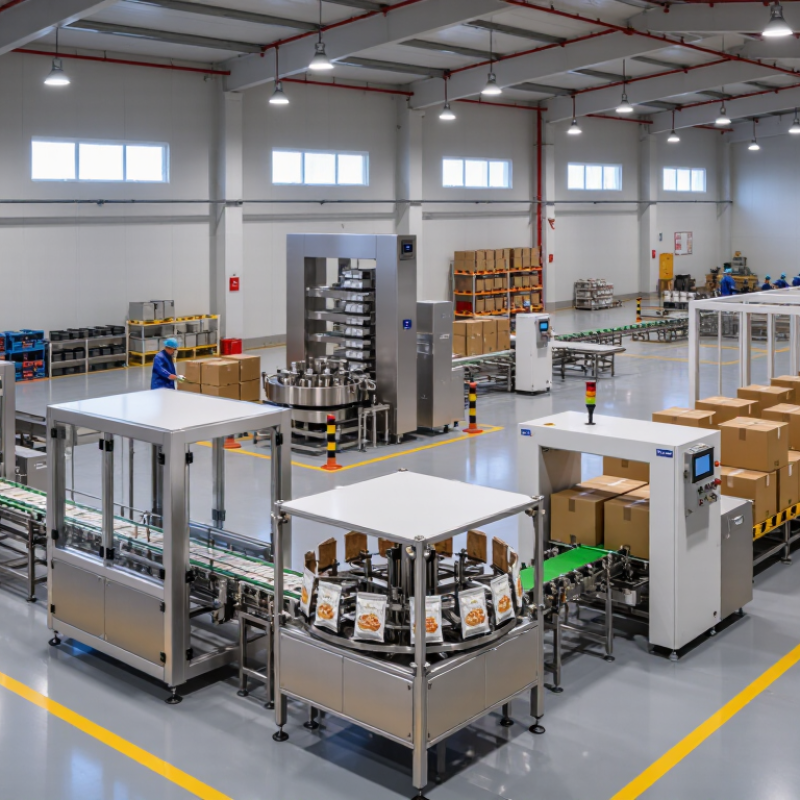
China manufactures a broad range of packaging machinery for food, beverages, cosmetics, pharmaceuticals, and household goods. Common types include filling machines, liquid and powder dosing systems, vertical form-fill-seal machines, horizontal flow wrappers, cartoners, labeling units, and case packers. End-of-line equipment includes palletizers, stretch wrappers, checkweighers, and vision inspection systems. Some factories also build integrated lines that connect filling, sealing, coding, inspection, and packing.
Automation is advancing quickly. The International Federation of Robotics reported 276,288 industrial robot installations in China during 2023, representing 51% of global installations. This supports wider use of robotic pick-and-place units and automated palletizing in Chinese packaging plants. PMMI’s 2024 Global Packaging Trends research also identifies labor shortages, flexible production, and automation as major investment drivers. For buyers, modular machines can be more practical than oversized lines. They support faster format changes and simpler maintenance.
The choice is rarely perfect. A high-speed filler may increase output but create more product loss during changeovers. A compact labeling machine may save floor space, yet demand careful alignment. From practical line reviews, operators should examine cleaning access, spare-part availability, control-system training, and actual speeds with their materials. Ask for sample testing. Small details matter. Reported speed is not always stable production speed. A reliable Chinese machine should provide traceable test records, clear safety documentation, and performance evidence under realistic factory conditions.
Choosing the best packaging machinery in China requires more than comparing purchase prices. Start with the product, packaging material, and required production speed. A machine handling fragile pouches may need gentler feeding than a carton line. Request a live demonstration using your actual materials. Sample testing exposes sealing wrinkles, product damage, and unstable filling accuracy. Ask for output records, not only impressive hourly claims. A polished demonstration can still hide inconsistent performance.
Build quality deserves close inspection. Check the frame, electrical cabinet, sensors, guards, and changeover points. Stainless steel surfaces should be smooth and easy to clean. Wiring should be labeled clearly and protected from moisture. Inspect whether operators can reach adjustment parts without unsafe movements. Review tolerance data for filling, weighing, cutting, or labeling. Small errors become expensive during long production runs. I would not judge reliability from appearance alone.
Service capability often decides whether equipment remains productive after installation. Confirm spare-parts availability, remote support, training, and response times in writing. Ask for preventive-maintenance schedules and troubleshooting procedures. Total cost includes energy use, tooling, labor, downtime, and replacement components. Independent inspection can verify factory claims before shipment. Some buyers overlook local installation conditions, including voltage, floor space, and humidity. That mistake is easy to make, and costly to correct.
What Is the Best Packaging Machinery in China?
How Chinese Packaging Machines Work Across Production Stages
The best packaging machinery is not judged by speed alone. It must connect every production stage with stable control. In a typical Chinese packaging line, conveyors move products from feeding to filling, sealing, coding, inspection, and palletizing. Servo motors adjust motion precisely. Sensors detect missing items, weak seals, and incorrect labels. A touchscreen then records alarms and production data.
This structure matters as packaging demand grows. Smithers’ The Future of Global Packaging to 2028 forecasts the global packaging market will exceed 1 trillion US dollars by 2028. PMMI industry research also highlights automation, labor efficiency, and flexible changeovers as major investment drivers. Chinese machinery often supports these needs through modular stations and quick recipe changes. A line can handle different pouch sizes with fewer mechanical adjustments. That sounds ideal. It is not always perfect.
During a factory trial, operators should check dust buildup, film tension, cleaning access, and restart time. Small faults become expensive delays. I would also question impressive speed claims without product samples and long-run testing. A machine that reaches 180 packs per minute may perform poorly with irregular products. Reliable selection requires testing the actual material, package design, and production rhythm. Documentation, spare parts, training, and remote support deserve equal attention. The fastest machine is rarely the best machine.
| Production Stage | Typical Chinese Packaging Machine | Main Function | Common Product Formats | Typical Materials | Indicative Operating Range | Key Selection Criteria |
|---|---|---|---|---|---|---|
| Product Preparation | Mixing, Blending and Dosing System | Combines ingredients or components and delivers a controlled quantity to the filling or forming line. | Powders, granules, liquids, sauces and small solid pieces | Stainless steel, food-grade polymers and hygienic seals | Batch or continuous operation | Accuracy, cleanability, dust control, recipe management and compatibility with the product |
| Primary Filling | Volumetric, Auger, Piston or Multihead Weigher | Measures and dispenses the product into containers, pouches, trays or other packages. | Powders, granules, snacks, liquids, pastes and tablets | Rigid containers, flexible film, laminated pouches and trays | Approximately 10–120 fills/min, depending on product and format | Filling accuracy, product characteristics, changeover time and integration with upstream equipment |
| Pouch Forming and Sealing | Vertical or Horizontal Form-Fill-Seal Machine | Forms a pouch from roll film, fills it with product and seals it in one automated cycle. | Pillow bags, gusseted bags, sachets, stick packs and three-side-seal pouches | PE, PP, PET/PE, paper laminates and aluminium-laminated films | Approximately 20–180 bags/min, depending on configuration | Film width, sealing temperature control, registration accuracy and seal integrity |
| Bottle and Jar Filling | Linear or Rotary Bottle Filling Machine | Fills prepared products into bottles or jars and may include capping within the same line. | Water, beverages, oil, shampoo, detergent and pharmaceutical liquids | PET, HDPE, glass and other rigid containers | Approximately 20–300 containers/min | Liquid viscosity, filling method, container stability, hygiene level and cap compatibility |
| Closing and Sealing | Capping, Induction Sealing or Lidding Machine | Closes containers and creates a tamper-evident or leak-resistant seal. | Screw-cap bottles, snap-lid containers, cups and jars | Plastic caps, aluminium foil, coated paper and heat-sealable films | Approximately 20–200 units/min | Torque control, seal temperature, leak prevention, cap alignment and tamper evidence |
| Cartoning | Automatic Cartoning Machine | Opens cartons, inserts products or leaflets and closes the carton using tuck-in or adhesive methods. | Bottles, pouches, blister packs, tubes and sachet multipacks | Folding carton board and paperboard cartons | Approximately 30–150 cartons/min | Carton dimensions, product orientation, insertion method and carton-board quality |
| Case Packing | Wrap-Around or American-Case Packer | Groups retail packages and loads them into shipping cases for transport and distribution. | Bottles, cans, cartons, trays and flexible pouches | Corrugated board, kraft paper and adhesive materials | Approximately 5–30 cases/min | Case pattern, product orientation, board strength, footprint and line speed |
| Palletizing | Robotic or Layer Palletizer | Arranges packed cases or bags in stable layers on pallets for storage and shipment. | Corrugated cases, sacks, shrink-wrapped bundles and trays | Wooden or plastic pallets, stretch film and corner protection | Approximately 10–60 cases/min, depending on payload and pattern | Payload, pallet dimensions, stacking pattern, floor space and safety guarding |
| End-of-Line Wrapping | Stretch Wrapper or Shrink-Wrapping Machine | Secures pallet loads or grouped packages to improve stability and protect them from dust and moisture. | Pallet loads, multipacks and grouped cartons | Stretch film, shrink film and protective edge materials | Approximately 20–120 pallet loads/hour | Film consumption, load stability, wrapping tension, package dimensions and heat requirements |
| Inspection and Quality Control | Checkweigher, Metal Detector and Vision Inspection System | Detects incorrect weight, foreign metal, missing components, print defects or poor seals. | Sealed pouches, bottles, cartons, trays and cases | Compatible with food, pharmaceutical and industrial packaging lines | Often matched to the upstream line speed | Detection sensitivity, product effect, reject accuracy, data recording and regulatory requirements |
| Coding and Traceability | Inkjet, Laser or Thermal Transfer Coder | Prints batch codes, expiry dates, barcodes, QR codes and other traceability information. | Film, labels, cartons, bottles, caps and shipping cases | Paper, plastic, glass, coated board and corrugated board | Suitable for intermittent or continuous production | Print resolution, substrate adhesion, code verification, solvent requirements and software connectivity |
The best packaging machine depends on product characteristics, required output, package format, available floor space, automation level, maintenance capability and applicable safety or hygiene standards. Operating ranges are indicative and vary by machine configuration, material and product.
What Is the Best Packaging Machinery in China? The answer depends on the product, factory layout, and required output. Food processors often need multihead weighers, vertical baggers, checkweighers, and metal detectors. Beverage plants may require rinsing, filling, capping, labeling, and case packing systems. Pharmaceutical facilities demand precise dosing, cleanable surfaces, and strong batch traceability.
According to Smithers, the global packaging market is expected to exceed 1.2 trillion US dollars by 2028. This growth increases demand for flexible, automated equipment. Chinese machinery can support small trial runs or high-speed production. Customization may include servo-driven filling, modified-atmosphere packaging, robotic loading, and vision inspection. Materials matter too. A thin film can reduce waste, but it may tear during sealing. That trade-off is often underestimated. Some designs look efficient on paper, yet perform poorly beside a dusty conveyor or unstable power supply.
Tips: Ask suppliers for product samples and a factory acceptance test. Confirm speed using your actual film, container, and product. Check cleaning time, spare-part access, software language, and operator training. Request data from similar applications, not only laboratory tests. The Packaging Machinery Manufacturers Institute reported continued investment in automation because labor shortages and productivity pressures remain significant. Still, automation is not always the best first step. A simpler semi-automatic line may offer better reliability for seasonal production. Mistakes happen. Design reviews should include maintenance staff before purchase.
There is no single best machine for every product. The most suitable choice depends on packaging format, material, production speed, hygiene requirements, and the level of customization required.
Chart explanation: The chart compares representative operating throughput by machinery type. Actual performance varies with product characteristics, package size, sealing method, automation level, and line integration. Custom options commonly include filling systems, sealing formats, servo control, vision inspection, weighing, coding, conveyors, and robotic loading.
The best packaging machinery in China is not the cheapest or fastest option. It is equipment that matches your product, output, workforce, and compliance needs. A powder filler needs different controls from a liquid bottling line. Product contact parts should use suitable stainless steel, clear welds, and easy-clean surfaces. Ask for documented tests, material certificates, electrical drawings, and a complete user manual.
Quality depends on more than a factory tour. Check machining accuracy, sensor protection, sealing performance, and changeover time. Request a factory acceptance test using your real packaging material. Confirm whether the supplier can support installation, operator training, spare parts, and remote troubleshooting. Compliance also matters. Review applicable electrical, machinery, food-contact, and workplace safety requirements for the destination market. A certificate alone does not prove reliable performance.
Tips: Compare total cost, not only the quotation. Include shipping, installation, energy use, tooling, maintenance, and downtime. Visit the production site if possible. Speak with recent customers, but do not trust every reference equally. No supplier is perfect. I would leave a small budget for adjustments, because real production rarely matches the first test. Put response times, inspection standards, warranty limits, and acceptance criteria in the contract. A detailed document protects both sides.
Call 815-281-5297 now to speak directly with an Algus expert or fill out the form below.