China’s packaging sector includes manufacturers with different materials, production scales, and customization capabilities. This guide introduces ten suppliers for buyers exploring eco blister packaging, from molded-pulp trays to recyclable plastic formats. The right choice depends on the product, shipping conditions, budget, and local recovery options.
Small details matter. A tray holding small electronic parts needs different protection from one displaying cosmetics. Buyers should compare sample fit, seal strength, clarity, minimum order quantities, and lead times. Ask suppliers what each material contains and how it should be sorted after use. Clear answers can prevent costly surprises.
The suppliers in this guide are starting points, not a universal ranking. Some may focus on design and sampling; others may offer larger production runs. Still, the label “eco” can be vague. That deserves scrutiny. Request current technical data, material specifications, and any relevant third-party documentation. Confirm that claims match the exact product and market, rather than relying on a broad company statement.
Samples tell you more. Check for sharp edges, loose inserts, scuffing, and damage after realistic handling. Ask how design changes affect tooling costs and production schedules. A supplier’s responsiveness matters, but it should not replace documented quality controls. This list can help buyers build a shortlist, yet every candidate needs independent review. Sustainable packaging is not automatically suitable packaging; a lighter material may still fail if it cannot protect the item or be recovered locally.
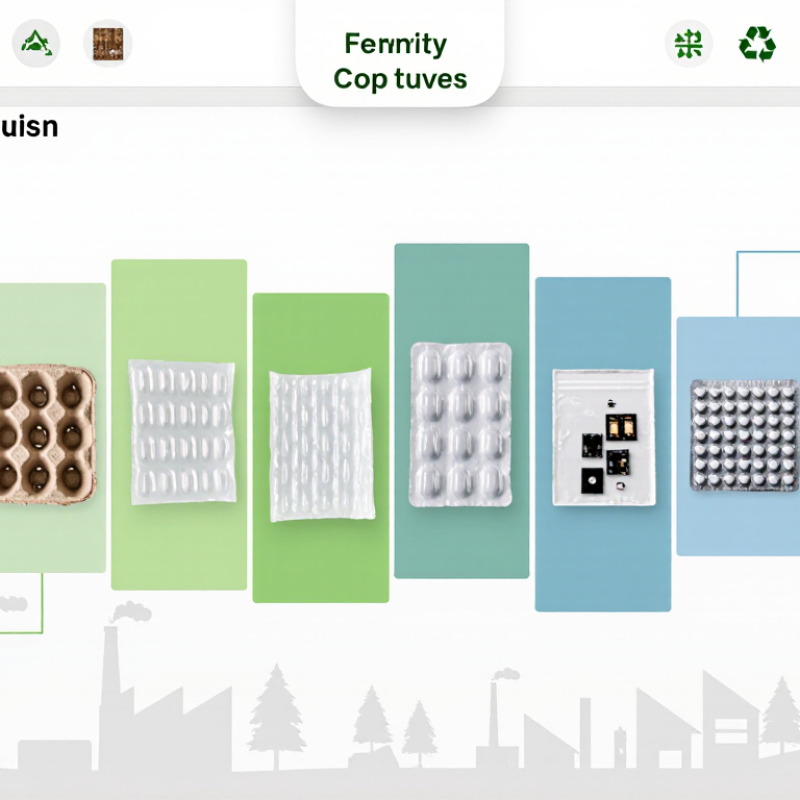
Eco-friendly blister packaging includes more than a tray labeled recyclable. It covers the formed cavity, backing card, coatings, inks, and how easily buyers can separate them. Common options include PET or polypropylene with recycled content, paperboard-backed blisters, and fiber-based molded trays. A simpler material mix can make sorting easier. But local recycling access matters. A technically recyclable pack may still be discarded if nearby facilities do not accept it.
The scale of packaging waste makes those details relevant. The US Environmental Protection Agency’s Advancing Sustainable Materials Management report recorded 82.2 million tons of containers and packaging in US municipal waste in 2018, or 28.1% of the total. The OECD’s Global Plastics Outlook reported that just 9% of global plastic waste was recycled in 2019. These figures cover broad waste streams, not blister packs alone. No option is perfect. A paper-backed plastic tray, for example, may need manual separation before recycling. Buyers should check material specifications, recycled-content claims, pack weight, and disposal guidance for the markets where products will be sold. A small label can change the outcome.
Evaluating China’s eco blister packaging suppliers requires more than comparing quotations. Buyers should inspect material specifications, recycled-content records, forming consistency, seal strength, and protection during transport. PlasticsEurope’s Plastics—the Fast Facts 2024 reports that packaging represented 39% of European plastics demand in 2022. This is a regional figure, not a direct measure of Chinese blister production, but it shows why packaging material choices deserve close review. Ask suppliers for test methods and batch records, not just a polished sustainability statement.
Proof matters.
Environmental claims also need context. The OECD’s Global Plastics Outlook (2022) estimates that only 9% of global plastic waste was recycled in 2019. A recyclable blister is not automatically recycled; local collection and sorting conditions matter. Buyers can compare material use per pack, verified recycled content, and life-cycle assessment boundaries, then check whether samples meet the same protection requirements as current packaging.
Test the sample.
A small pilot run can reveal warped cavities, weak seals, or excess scrap that a datasheet may miss. Rankings should reflect documented performance and transparent limitations, not attractive claims alone.
China’s eco blister packaging market includes suppliers with distinct materials and production strengths. These profiles are practical starting points, not a verified ranking; confirm specifications directly before ordering.
A molded-fiber supplier may offer trays with a dry, lightly textured surface. A paperboard specialist can develop folding cards that reduce plastic in retail packs. A recycled-PET thermoformer can make clear shells, though recycled content and clarity need checking. A compostable-material converter may suit short-life applications, but storage conditions matter. A hybrid-packaging supplier combines paper backing with a formed shell for product visibility.
A custom tooling supplier can adjust cavities to fit unusual shapes, but new molds add cost. A small-batch producer may support market trials with lower initial volumes. An export-focused factory may provide stronger documentation, yet buyers should inspect sample records. An automation-led plant can deliver consistent cuts and seals; ask how defects are tracked. A design-and-testing supplier can help compare materials, fit, and pack strength. Details vary. Ask for samples, material data, production lead times, and clear explanations of environmental claims. Even a neat sample can behave differently on a fast packing line.
When comparing China’s eco blister packaging suppliers, examine the actual material structure, not just the word “sustainable.” Recycled PET can retain clarity and suit formed trays, while paper-based blisters may reduce plastic use but need careful checks for moisture resistance and product visibility. Fit matters. The OECD’s Global Plastics Outlook (2022) reports that packaging represented 40% of plastic waste generated in 2019. That figure makes material choice important, but it does not prove that one format is best for every product. Ask suppliers for material specifications, recycled-content evidence, and samples tested with the intended product.
Certifications and factory capabilities also separate credible suppliers from polished sales claims. Request current ISO 9001 or ISO 14001 certificates, and verify their scope and issuing body. For fiber packaging, check applicable chain-of-custody documentation; for compostability claims, confirm the exact tested material and relevant standard. A certificate alone is not enough. Compare thermoforming depth, sealing consistency, die-cut edge quality, and tolerance records. Ask whether the supplier can run a small pilot before full production, then inspect sample seals and tray corners. Production capacity matters, but so do changeover time and quality checks across shifts. I would not assume every “eco” option performs equally well; a short transport or shelf-life test may expose weaknesses that a brochure misses.
When comparing China’s eco blister packaging suppliers, look beyond attractive samples and broad sustainability claims. Ask for the exact material composition, recycled-content records, and evidence supporting recyclability or compostability. Check whether the packaging protects your product during shipping and fits your filling equipment. A sample that looks sturdy may crack at the sealing edge. Request dimensions, thickness tolerances, and test results, then compare them with your own requirements.
Tips: Ask for a production sample, not only a showroom sample. Confirm who issues each test report and whether it matches the material being quoted. Keep the answers in writing.
Verify the supplier’s manufacturing capacity with a live factory walkthrough or an independent audit. Discuss minimum order quantities, lead times, defect handling, and change control before paying a deposit. A small pilot order can reveal sealing problems, color variation, or delays that polished presentations do not show. I would not treat one successful sample as proof of consistent production; that assumption is easy to make, and hard to undo. Check whether the supplier can trace material batches and provide updated documents when specifications change.
Buyer shortlist and verification matrix. The ten rows below are unranked shortlist slots, not named or independently verified suppliers. Confirm each supplier’s capabilities and claims directly before purchase.
| Shortlist Slot | Packaging Option to Assess | Key Information to Request | Evidence to Verify | Sample and Production Checks | Buyer Assessment |
|---|---|---|---|---|---|
| Candidate 01 | Molded-fiber or molded-pulp blister components | Fiber feedstock, coatings or additives, moisture resistance, and intended disposal route. | Material specification, test reports relevant to the application, and substantiation for environmental claims. | Check fit, edge quality, dusting, moisture performance, and consistency across samples. | Pending verification |
| Candidate 02 | Recycled-content PET (rPET) blister components | Declared recycled-content percentage, whether it applies to the whole component, and material traceability. | Supplier declaration and supporting chain-of-custody or recycled-content documentation appropriate to the claim. | Check clarity, color variation, forming quality, sealing performance, and batch consistency. | Pending verification |
| Candidate 03 | Mono-material PET or other single-polymer design | Polymer composition of the blister, lid, label, and any coatings or adhesives. | Component-level material declarations and confirmation that the proposed design is compatible with the buyer’s target recycling stream. | Inspect whether components can be separated and confirm closure, protection, and opening requirements. | Pending verification |
| Candidate 04 | Paperboard-backed blister or paper-based pack | Board grade, barrier treatment, plastic-window composition, and packaging configuration. | Board and film specifications; verify any recyclability claim for the complete pack in the intended market. | Check adhesion, card stiffness, print quality, blister attachment, and product visibility. | Pending verification |
| Candidate 05 | PVC-free blister construction | Replacement material, complete component list, forming limits, and product-protection performance. | Written PVC-free declaration covering all relevant packaging components, supported by material specifications. | Compare forming, sealing, clarity, drop protection, and compatibility with existing packing equipment. | Pending verification |
| Candidate 06 | Reduced-material or lightweight blister design | Proposed material reduction against a defined baseline and any changes to dimensions or structure. | Comparable before-and-after drawings, weights, and test results; confirm the baseline and measurement method. | Check product retention, transport protection, seal integrity, and handling performance at the reduced weight. | Pending verification |
| Candidate 07 | Blister packaging with recycled or recyclable backing card | Card composition, coatings, inks, adhesives, and separation method for the blister and backing. | Material declarations for each component and market-specific evidence for any recycling claim. | Check card tear resistance, print rub, blister bond, and ease of separating components. | Pending verification |
| Candidate 08 | Compostable-claim blister or fiber pack, where applicable | Exact material, required composting conditions, certification scope, and disposal instructions. | Current certification or test documentation applicable to the exact product and claim; do not rely on a generic material claim. | Confirm the shipped specification matches the documented material and that labeling gives accurate disposal guidance. | Pending verification |
| Candidate 09 | Custom thermoformed blister with an eco-design brief | Tooling ownership, design-for-material-reduction options, minimum order quantity, and change-control process. | Technical drawings, tooling terms, sample approval records, and written production specifications. | Approve a production-representative sample and verify dimensions, forming quality, seal, and repeatability. | Pending verification |
| Candidate 10 | Export-ready supplier for a defined blister specification | Production capacity, lead time, quality controls, export experience, and destination-market requirements. | Facility and quality-system documents, inspection records, product specifications, and shipment documentation samples. | Run a pilot order; inspect incoming quality, packaging protection, lot identification, and delivery performance. | Pending verification |
Call 815-281-5297 now to speak directly with an Algus expert or fill out the form below.