| PET Sheet |
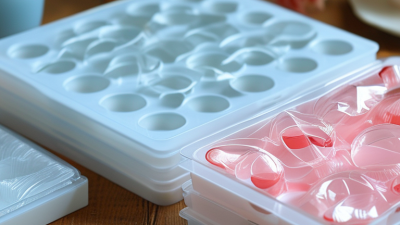
Transparent polyethylene terephthalate sheet, commonly produced in various gauges according to the product and forming requirements. |
Creates the clear three-dimensional cavity that holds and displays the product. |
The sheet is heated until it becomes formable, shaped over a mold by vacuum and/or pressure, and then cooled to retain the cavity shape. |
PET provides good clarity, stiffness, dimensional stability, and resistance to many oils and dilute chemicals. Thickness should match the product weight and required protection. |
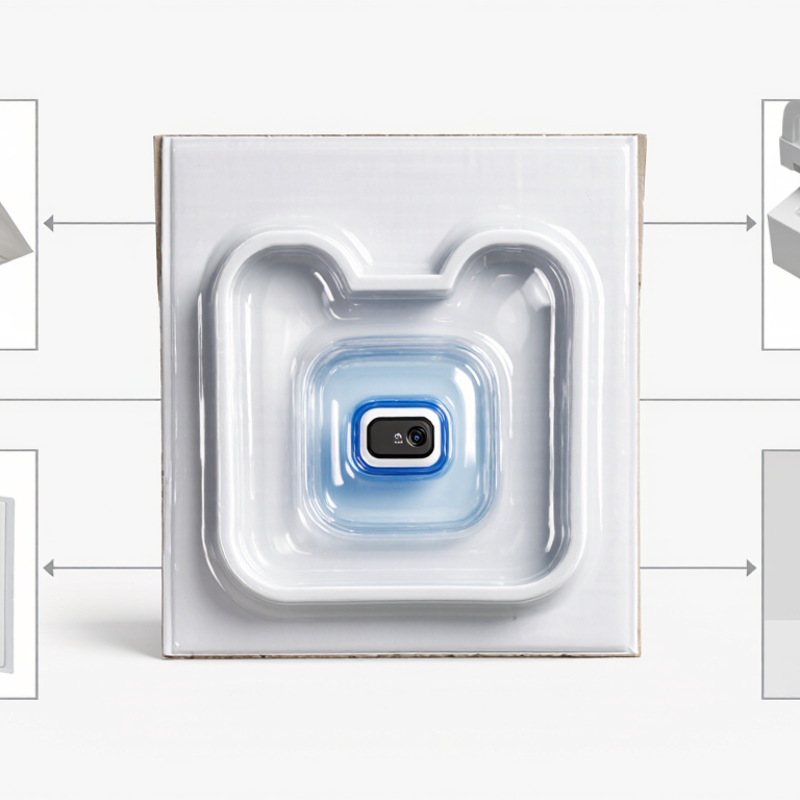
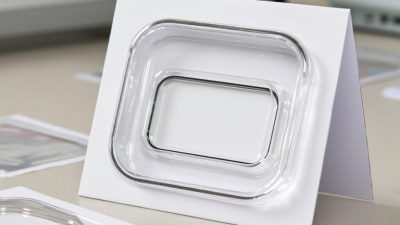
| Formed Blister Cavity |
A molded pocket with a product-specific outline, depth, and retaining features. |
Positions the product and helps prevent movement, impact, and abrasion during handling. |
Ribs, supports, corners, and snap-in areas can be designed into the cavity to hold the item securely without excessive pressure. |
Clearances must allow easy product insertion and removal while maintaining sufficient retention and protection. |
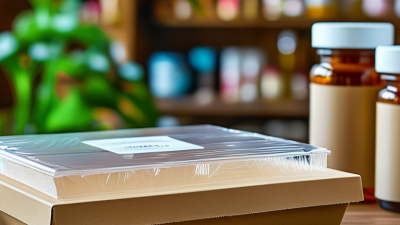
| Backing Card or Lidding Material |
Printed paperboard card, coated board, foil laminate, or another compatible sealing substrate. |
Closes the cavity, provides a printable information surface, and can add tamper evidence. |
The backing is attached to the flange around the cavity by heat sealing, pressure-sensitive adhesive, or mechanical locking, depending on the design. |
Surface treatment and sealing compatibility are essential. Paperboard may need a seal coating or adhesive layer to bond reliably to PET. |
| Seal Flange |
Flat perimeter area formed around the blister cavity. |
Provides the bonding surface between the PET blister and the backing material. |
During sealing, heat and pressure activate the seal layer or adhesive across the flange, producing a closed package. |
The flange should be wide and even enough to achieve a continuous seal without wrinkles, contamination, or incomplete bonding. |
| Heat-Seal Coating or Adhesive Layer |
A compatible polymer coating, adhesive, or sealant applied to the backing material or blister interface. |
Joins the PET cavity to the backing and helps prevent accidental opening. |
Heat, pressure, or adhesive contact creates a bond around the cavity perimeter. Some designs are intended to be peelable, while others are designed for permanent closure. |
Sealing temperature, dwell time, pressure, and cleanliness must be controlled to prevent weak seals, distortion, or damage to the product. |
| Perforations or Tear Features |
Pre-cut lines, tear strips, notches, or opening tabs incorporated into the backing or plastic structure. |
Controls how the consumer opens the package. |
Concentrated stress at the perforation or notch allows the package to open along a planned path instead of tearing unpredictably. |
Opening force should balance accessibility with resistance to accidental opening during transport and storage. |
| Printed Graphics and Product Information |
Text, symbols, instructions, barcodes, warnings, and decorative graphics printed on the backing card or label. |
Communicates product identity, usage information, handling instructions, and regulatory details. |
The backing card acts as the primary information panel while the transparent PET allows the product to remain visible. |
Important information should remain readable after folding, sealing, cutting, and distribution. Ink and coating selection should suit the printing process. |
| Optional Tamper-Evident Features |
Destructible seals, tear-open cards, sealed edges, or printed opening indicators. |
Shows whether the package may have been opened or interfered with before purchase. |
The feature breaks, changes appearance, or leaves visible evidence when the package is opened. |
The design should make tampering noticeable without making normal opening unnecessarily difficult for the intended user. |
| Optional Protective Coating |
Surface coating, varnish, laminate, or protective finish applied to the card or printed area. |
Improves resistance to scuffing, moisture, handling, and ink wear. |
The coating forms a protective surface layer over the printed substrate while preserving the required appearance and readability. |
Coatings must not interfere with heat sealing, adhesive bonding, recycling instructions, or barcode scanning. |
| Manufacturing Process |
Sheet preparation, thermoforming, trimming, product loading, sealing, cutting, inspection, and packing. |
Converts PET sheet and closure materials into a finished protective package. |
PET is heated and formed first; the product is placed in the cavity; the backing is aligned and sealed; the pack is trimmed and inspected. |
Consistent temperature, forming pressure, mold accuracy, alignment, seal strength, and dimensional inspection are important for reliable production. |
| Recycling and Material Identification |
PET is commonly identified as plastic resin code 1. The complete pack may also contain paperboard, coatings, adhesives, or other materials. |
Supports correct sorting and informs end-of-life handling. |
Recycling performance depends on the local collection system and whether the PET blister can be separated from other package components. |
Material combinations, coatings, inks, and adhesives should be selected with the intended recycling infrastructure and applicable packaging rules in mind. |